Switching jobs for better pay or position? Before you start your new journey, refrain from committing these financial mistakes.
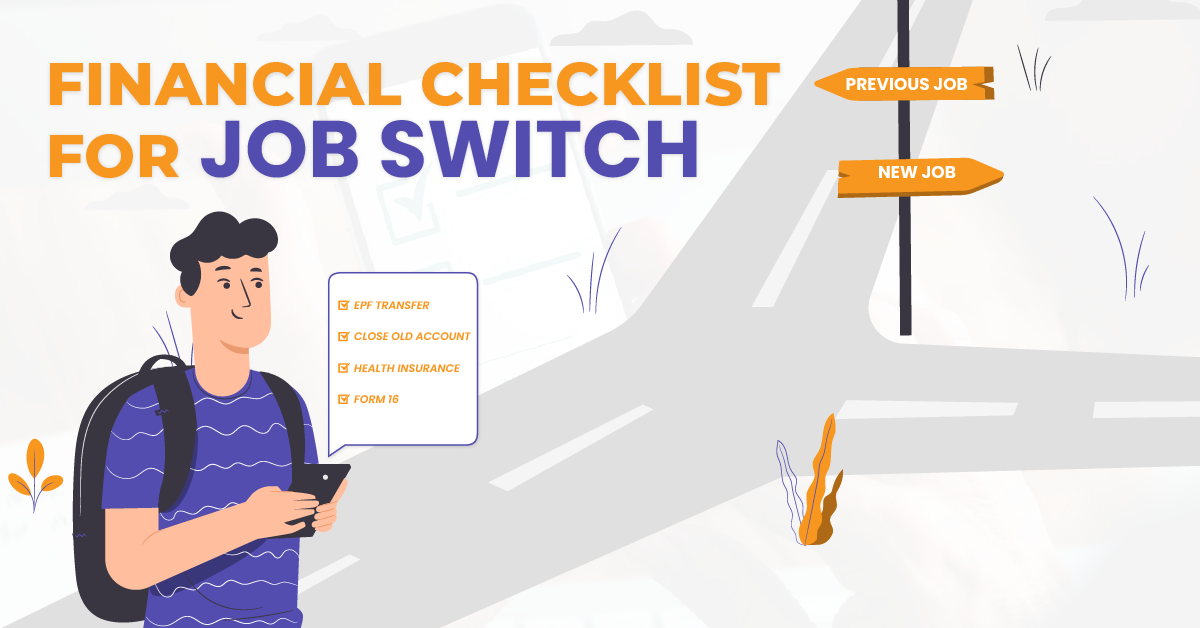
Here is the Financial Checklist that you must check while switching jobs.
EPF Account
There is a very important EPF hack that you need to know about. If you withdraw your PF balance before 5 years, it will be taxable. So, if you are switching your job before 5 years, you need to transfer your EPF account to your new employer. This will not break the period of 5 years. To transfer the account, you need to visit the EPFO site and fill out Form 13. You need to submit this Form to both your previous and current employer.
Close Old Salary Account
Your new employer may require you to open a new salary account. It is important that you do not forget to close the old one, as it would unnecessarily block your funds in the name of minimum balance and bank charges. Also, it could be a fuss to manage an extra bank account.
Health Insurance
Before you accept your salary hike in the new job, do this math first. With medical inflation reaching heights, it is important to have adequate health insurance coverage. Compare the health insurance cover of your previous and new employer. If the insurance coverage offered by the new employer puts you in a probability to shell out money from your pocket, then the salary hike may not be justified. You can also convert Corporate Health Insurance with your previous employer to an individual policy while resigning.
Form 16
When you change jobs, you are most likely to have two Form 16s: one from the previous employer and the other from the new employer. For Income Tax, the financial year is from April to March. Suppose you join the new company in Jan, and you opt for the new tax regime; the new employer will not deduct tax if the income earned during the three months (Jan-Mar) is up to Rs. 7 lakhs. Although, the income of your overall financial year is taxable. It is important to declare your previous salary structure to your new employer so that TDS will get deducted as per your total income and you can avoid paying additional tax and interest at the time of filing the income tax return.
Conclusion
So, these are some points that you need to align with your previous and new employer while switching jobs. Apart from these, there are many personal financial factors that are to be compared, like tax-deductible allowances, increase in tax liability, relocation cost, if any and work policies. We will explore them in a separate article for you.
Leave a Reply