Introduction
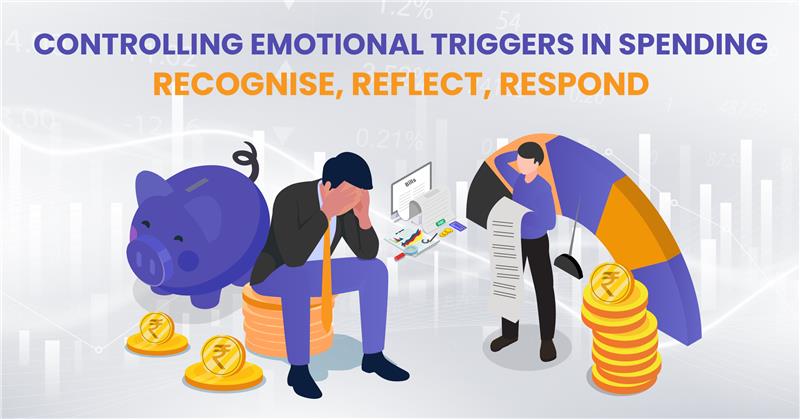
Do you often buy things to make yourself feel better, even if you do not really need them? You are not alone. Emotional spending has become very common these days; especially with the ease of online shopping and the availability of digital wallets, it is easy to fall into the trap of emotionally triggered spending. Earning more and saving more are essential. However, such efforts cannot flourish without developing better spending habits.
Managing your spending is the most critical factor in achieving long-term financial health and hence, it is important to adopt a conscious approach to control and deal with emotionally triggered spending.
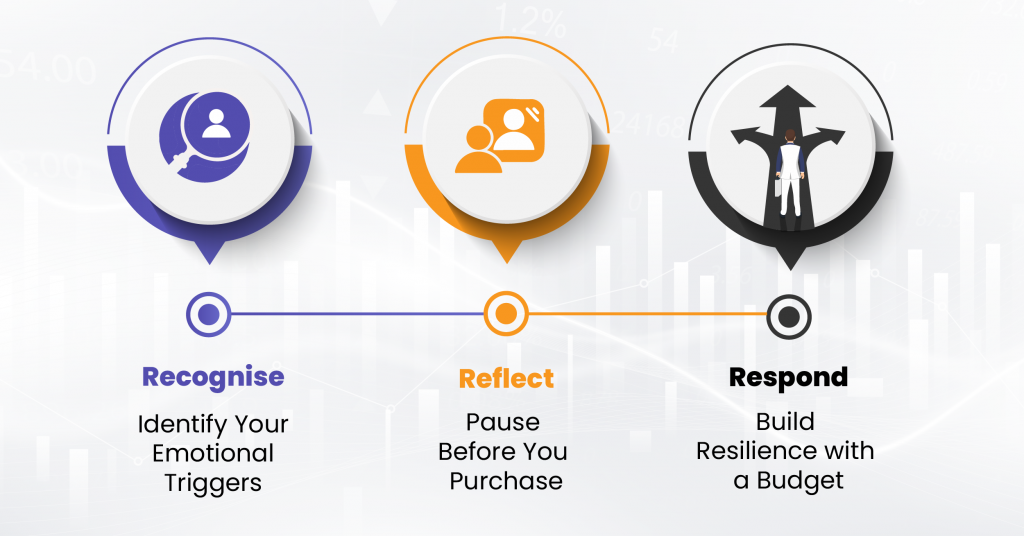
This blog explores how three simple steps—Recognise, Reflect, and Respond—can help you to flag and control your “money triggers” and aid in achieving greater financial stability and prosperity.
Recognise: Identify Your Emotional Triggers
Impulsive buying significantly shapes our spending patterns. The first step to controlling emotional spending is to recognise your emotional spending triggers—the moods, moments, or environments that often prompt you to spend unnecessarily or unreasonably. For example:
- – Stress or frustration: You tend to shop when you are emotionally stressed after a tough day at work or when life feels out of hand because shopping gives a sense of relief or control.
- – Boredom: During moments of boredom, shopping can become entertainment and result in spontaneous purchases.
Examining your psychological traits and tracking expenses can give you an understanding of patterns of your unique emotional triggers.
Reflect: Pause Before You Purchase
Once you have identified your triggers, the next step is to pause and reflect before you reach for your wallet. This practice of reflection acts as a powerful tool in breaking the chain of impulsive spending. Ask yourself:
- Do I really need this or is it just something that I want right now?
- Am I buying this to feel better emotionally—and is it adding real value to my well-being, or just a quick fix I might regret later?
- Can this purchase wait a while, like maybe until tomorrow?
Pausing even for 10 minutes can be a significant shift. This moment of reflection helps you move from a reactive impulse to a responsive mindset, empowering better financial decisions..
Response: Build Resilience with a Budget
Once you have recognised and reflected on your urges, it is time to respond by building a practical, resilient budget which is not about restricting yourself but about being a roadmap to achieve financial goals. A well-designed budget allocates funds not only for essentials and savings but also for occasional indulgences, helping you to avoid guilt-driven overspending.
- You may consider creating a separate “emotional buffer” fund: a small amount you set aside to avoid disrupting the allocated budget.
- One more effective approach is Zero-Based Budgeting, where you plan where every rupee will go each month afresh.
To learn more about zero-based budgeting and how to implement it, check out our detailed blog post on Zero-Based Budgeting.
Conclusion: Emotional Awareness is Financial Strength
Controlling emotional spending starts with emotional awareness. While this is not typically a focus in academic studies, its impact is real and widespread. By recognising your triggers, reflecting before spending, and building resilience with a structured budget, you can make smarter, more intentional financial choices.
Contributors:
CA N Srilatha Bhat – LinkedIn
Kuldeep Sarma – LinkedIn
Poonam Vernekar – LinkedIn
Leave a Reply