Financial planning is the cornerstone of achieving long-term financial stability and independence. Meticulous planning with precision, thorough research and acute foresight is the key to successful financial planning. People often proceed with their financial investments without thoroughly understanding the future risks and complexities involved in these steps. Poor planning, overlooked details, and unrealistic expectations can lead to disastrous outcomes and might put your hard-earned savings into jeopardy. Let us try to understand the 5 most common pitfalls that every individual or household should avoid while going ahead with their financial planning and setting their financial goals.
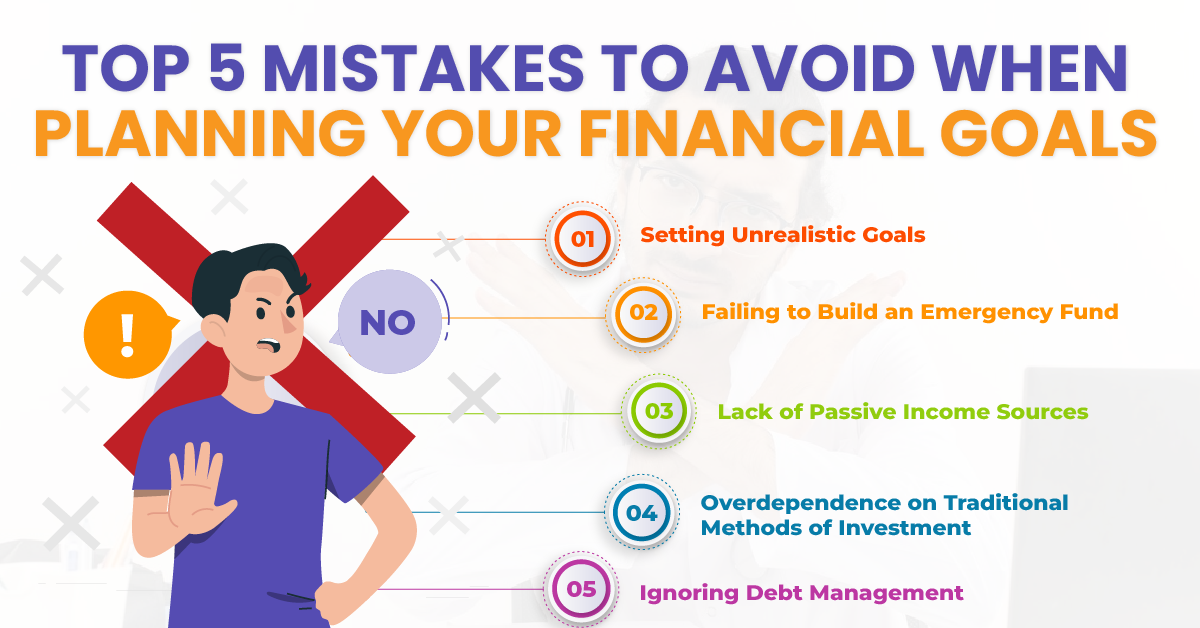
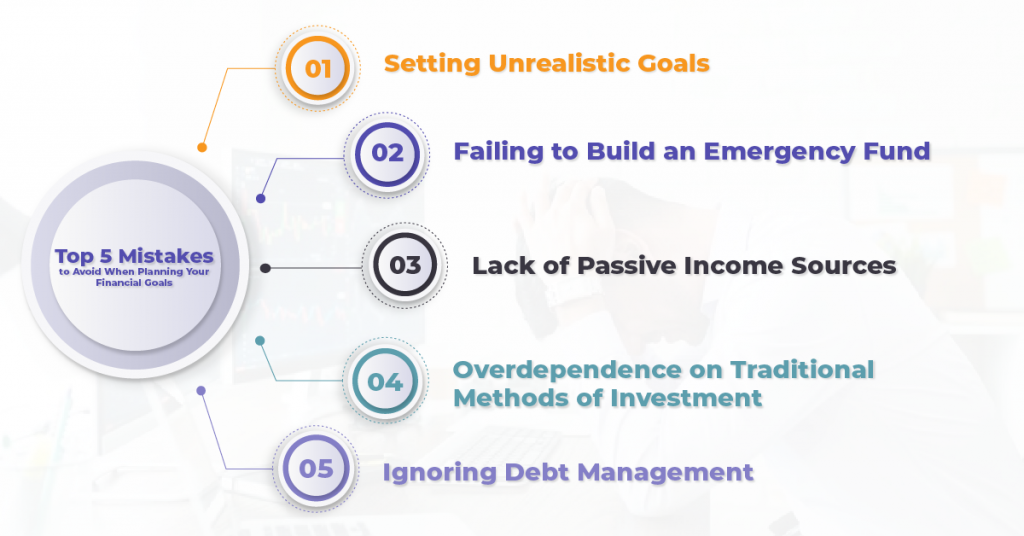
Top 5 Mistakes to Avoid When Planning Your Financial Goals
- Setting Unrealistic Goals
- Failing to Build an Emergency Fund
- Lack of Passive Income Sources
- Overdependence on Traditional Methods of Investment
- Ignoring Debt Management
1. Setting Unrealistic Goals
One of the most common errors in financial planning is setting goals that are either too ambitious or too vague. To have specific ambitions and aspirations in life and trying to achieve the same is a part of basic human nature. But it is essential to make sure that your aspirations are realistic and achievable. For example, saving for early retirement at 40 sounds appealing, but without a realistic assessment of your income, expenses, and investment strategies, such goals may prove unattainable. Therefore, it is crucial that one should have goals that are plausible and realistic, and goals should be set taking the practical scenario into consideration. You may break your long-term goals into smaller, manageable chunks with clear deadlines and metrics for success.
2. Failing to Build an Emergency Fund
Having an emergency fund for unforeseen events is very crucial for every individual. It is seen very often that people with definite goals and financial planning focus on long-term wealth-building strategies, such as investing in stocks or real estate, but end up neglecting the importance of having an adequate emergency fund to mitigate the crisis situations in life. Life is always unpredictable. Medical emergencies, sudden loss of job and income, or impacts of natural calamities on your health or habitat are a few of the many emergency situations that can arise in anyone’s life. Therefore, an emergency fund with adequate savings to face these unforeseen challenges is a must for successful financial planning.
3. Lack of Passive Income Sources
Passive income comprises of earnings generated with minimal regular effort besides the money earned through the work that an individual is involved in to earn his/her livelihood. Such passive income provides a consistent revenue stream with minimal time invested into achieving these incomes. Establishing passive income is an essential part of robust financial planning. It not only alleviates your ever-increasing day-to-day expenses but also contributes to your long-term financial independence and early retirement plans.
4. Overdependence on Traditional Methods of Investment
Relying solely on traditional investment methods can limit your earning potential, often resulting in lower returns than what modern investment opportunities can yield for you. It also hinders the creation of a sound financial portfolio that can mitigate your daily financial challenges and help you achieve your goals. Therefore, creating a diversified portfolio taking into consideration all the available investment opportunities that can offer higher returns while balancing your risk tolerance is essential for your financial planning to succeed.
5. Ignoring Debt Management
Debt can turn out to be a significant roadblock in achieving financial goals. While loans and debts can prove lifesavers in certain cases, especially while venturing into some crucial aspects of life, such as purchasing a home for your family or pursuing the educational and career aspirations of your children, a lack of proper debt management can be fatal to your financial planning. Failing to prioritise the regular payment and closure of high-interest debts, such as bank loans, third-party debts and credit card balances, can severely impact your ability to save and invest for your future dreams. An effective strategy for debt management that prioritizes the repayment of all the existing debts that you currently have is a must.
Conclusion
Financial planning requires thoughtful, informed decisions. By seeking professional advice, avoiding these common mistakes, and setting realistic goals you can always be better equipped to secure your financial future and achieve your desired objectives in life.
Contributors:
Kuldeep Sarma – LinkedIn
Poonam Vernekar – LinkedIn
Leave a Reply